
Description unavailable (Photo credit: B Tal)
I don’t love to grocery shop. This is unfortunate, because here in Manhattan, it’s something that needs to be done frequently. Any and everything you buy has to be carried home, and most of us don’t have large refrigerators, freezers, or storage space for stocking up. Add in the knowledge that you can walk outside and hit any number of stores within a few blocks, and there isn’t the same pressure to remember everything you need in one shot.
The cost of groceries here, outrageous. I know this is so because when we’ve gone on vacation and shopped for groceries at stores geared towards ripping off tourists, while the other customers are grumbling I’m skipping through the aisles, filling the cart and trying to decide what’s practical to take home. I try to shop at Trader Joe’s as much as possible, it’s a significant savings compared to the other groceries that are much closer. But it isn’t always practical, it’s twenty four blocks away. So if I’m doing a bigger shop, great! Worth the cost of the cab ride home, still saving. But if I only have twenty minutes to get there, shop, and come home, don’t need much, or I need things they don’t carry (like regular white or brown rice), it doesn’t make sense.

Grocery Store #1 (Photo credit: wgdavis)
I trek to Whole Foods for rice and flour (cheapest in the area, I buy it from their bulk containers, they have enough of a turnover that it’s always fresh) and soy milk for Flower Child (yes, their brand of soy milk is the absolute lowest price). For the certain basics or when I’m running out, I go to one of the two cheapest groceries in the area. Both conveniently located within three blocks of my apartment. They don’t look like the artsy photo above. Dark, dingy, cleanliness is questionable, the cashiers are surly, don’t even think of asking for help from a stocker for something you can’t reach, aisles are crazy narrow–any number of which are usually blocked by boxes waited to be unloaded–and if you’re smart, you’ll check expiration dates of everything before bringing anything home.
I just ran to one of the two “inexpensive” stores this morning. If you’re curious, a gallon of low fat, non-organic milk is $4.89 there, a half gallon is $2.99. A gallon of store brand distilled water for top-offs for the reef tank,* $1.19. Honey-Nut Cheerios, 12.9 oz box, $5.39. Navel (not organic) oranges, .99 each. One loaf of sliced wheat bread, $4.19. A 10 oz “brick” of Cafe Bustelo–about as far from fancy coffee as you can get, $4.69. To be fair, Bustelo goes on sale regularly. Five years ago the sales were two bricks for $5, two years ago it became 2 for $6, now it’s 2 for $7. I have to make a new batch of doggie gumbo tomorrow, so I bought a pound of cheapo ground beef, $3.63, and a pound of ground chicken, $4.29.
Getting the picture? Chasing in four different directions for the cheapest prices, reasonable quality (yanno, fresh and none of those free pets that skitter across the counter as you unload), calculating, carrying, it’s exhausting. Screw cooking, between the financial, physical, and stress tolls I don’t even want to eat.
Over twenty years ago, I had a friend who theorized the nickel deposit on bottles was instated in NY as a way for the homeless to get money to feed themselves. Was he onto something? I don’t know, don’t remember his entire argument, but he was one of those people who could argue anything and have you believe he was brilliant. But while I do see plenty of homeless grabbing cans and bottles out of the corner trash cans, the real business of it is with the senior citizens. On days when the recycling bags get put out on the street for pickup, I find seniors by every large apartment building, filling carts and Hefty bags with empty bottles. These are not days you want to find yourself in a hurry at the aforementioned less expensive grocery stores, because you’ll be on line forever, waiting for the elderly gentleman ahead of you to have each bottle and can checked and tallied before he can turn around and shop. Think about my little shopping list above, that’s a lot of nickels; many, many bottles to carry. Individual, older people trying to feed themselves off of a fixed income, not organized groups with a vehicle to get to the big redemption center.
At night, in these stores, you find what Man Child calls the shuffle of shame. On line to buy a forgotten gallon of milk, you often find yourself behind two seniors cashing in bottles, three finance-looking or professional people who are embarrassed to find themselves in this grocery store (but it’s a dollar cheaper for that box of Cheerios here than in the cleaner, higher end grocery stores), and a stinky guy buying dish detergent. But sometimes you also find one of those New York moments. The elderly woman who’s come back with her shopping cart, straight to the sighing, texting cashier ahead of everyone else on line. And the cashier rolls her eyes, holds out her hand, and takes the jar of applesauce from the woman, pops the seal and hands it back, so the senior can go home and eat it. She couldn’t open it by herself in her apartment, and needed a little help.

Beverage container redemption center (Photo credit: Hobo Matt)
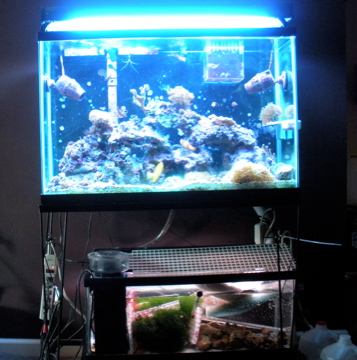
*Reef tanks use salt water. Water evaporates, salt doesn’t, so you have to “top off” the tank with fresh water. Because these are very delicate critters, tap water can’t be used. Most reefers buy and run an RO/DI water filter, so they can use tap. With a very tiny kitchen, and even tinier (1) bathroom, I can’t tie up a faucet or use the space needed to run these filters, so I buy distilled.

















 mrsfringe